
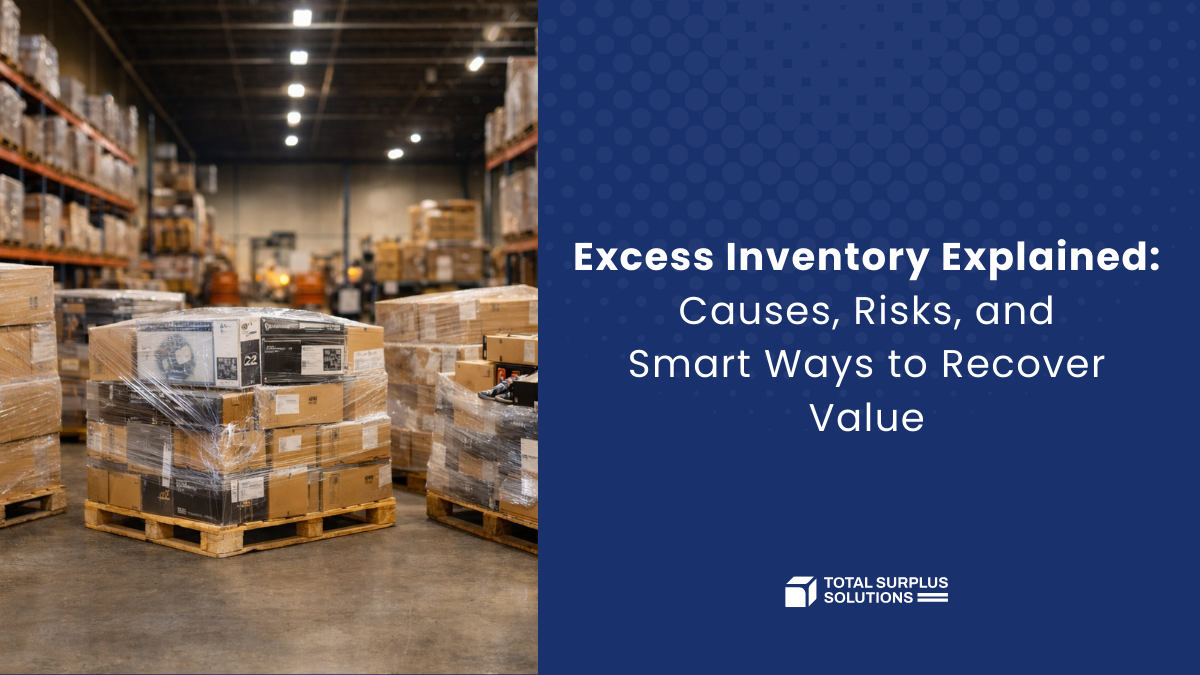
Excess inventory is a reality for nearly every growing business. It is not a sign of poor management or failed strategy. In most cases, it is the result of thoughtful decisions made under uncertainty. Forecasts change, retailers adjust commitments, and markets shift faster than supply chains can react.
What makes excess inventory challenging is not just the product itself, but the lingering impact it has on cash flow, operations, and decision-making. Inventory that once represented opportunity can quietly become a constraint. Warehouses fill up, capital remains tied up, and teams spend valuable time debating what to do next.
Understanding excess inventory clearly and addressing it intentionally allows businesses to recover value while maintaining control over their brand and channels. This article explores what excess inventory really means, why it happens, how to identify it early, and when selling excess stock becomes the smartest option.
What Excess Inventory Really Means for Growing Businesses
Excess inventory refers to a product that no longer aligns with a company’s current sales velocity, channel strategy, or demand outlook. It does not necessarily mean the inventory is defective, outdated, or unsellable. In many cases, excess inventory is brand-new, fully functional product that simply no longer fits the original plan.
For manufacturers, distributors, and retailers, excess inventory often emerges during periods of growth or transition. A company may expand its product line, enter new channels, or commit to larger production runs to support growth. When market conditions change or demand slows, those commitments can quickly create inventory overhangs.
From an accounting perspective, inventory may still carry value. Operationally, it becomes restrictive. Cash is locked into slow-moving products. Warehouse space is consumed. Insurance, handling, and storage costs continue to accumulate. More importantly, excess inventory limits flexibility. Capital tied up in unsold goods cannot be redeployed into faster-moving inventory, marketing efforts, or new initiatives.
Excess inventory is not just a warehouse problem. It is a capital efficiency problem that affects nearly every part of the business.
The Most Common Causes of Excess Stock
Excess inventory rarely has a single cause. More often, it is the result of several overlapping factors that compound over time.
One of the most common drivers is forecasting variance. Even the most sophisticated demand planning models struggle to predict sudden changes in consumer behavior, economic conditions, or competitive dynamics. When sales fall short of expectations, inventory exposure grows quickly.
Retailer order reductions or cancellations are another major contributor. Products built for specific retailers, promotions, or seasonal programs can become excess overnight if orders are reduced or pulled altogether. In these cases, the inventory may be perfectly usable but difficult to redirect without discounting.
Many businesses also accumulate excess stock due to overbuying for cost efficiency. Volume discounts, minimum order quantities, and freight optimization often incentivize larger purchases. While these decisions reduce per-unit costs, they increase risk if sell-through does not materialize as planned.
Other common causes include product refreshes, rebrands, regulatory or labeling changes, and packaging updates. Seasonal inventory that arrives late or misses its selling window can also quickly become surplus.
None of these scenarios indicate poor management. They are normal challenges in dynamic markets where speed and scale matter.
The Hidden Risks of Holding Excess Inventory Too Long
Holding excess inventory often feels safer than selling it, particularly when recovery values are lower than the original cost. However, holding inventory carries risks that are easy to underestimate.
The most obvious risk is carrying costs. Storage, handling, insurance, and labor expenses add up over time. Even modest monthly costs compound quickly when inventory sits for extended periods.
There is also opportunity cost. Capital tied up in excess inventory cannot be used to support faster-moving products, new launches, or growth initiatives. Over time, this can slow the entire business.
Another risk is diminishing optionality. As inventory ages, options narrow. Packaging becomes outdated. Demand shifts. Inventory buyers become more selective. What could have been sold through controlled channels may eventually require aggressive discounting or disposal.
Finally, excess inventory can create organizational drag. Teams spend time debating what to do with old stock instead of focusing on forward-looking priorities. Decisions become reactive rather than strategic.
Recognizing these risks early helps companies avoid turning a manageable issue into a long-term burden.
How to Identify Excess Inventory Before It Becomes a Problem
The most effective companies do not wait until inventory is clearly distressed before taking action. They build processes to identify risk early.
Inventory aging is one of the clearest indicators. Products sitting beyond internal thresholds such as 90, 120, or 180 days without consistent movement should prompt review. This does not mean immediate liquidation, but it does mean the inventory deserves attention.
Another important signal is sell-through performance versus forecast. When actual demand consistently trails projections, inventory exposure compounds quickly. Early intervention preserves more recovery options.
Channel concentration also matters. Inventory tied too tightly to a single retailer, customer, or promotion carries higher risk. If that channel pulls back, recovery options narrow fast.
Often, the first warning sign is internal misalignment. When sales, finance, and operations struggle to agree on how to handle certain inventory, it usually means the product no longer fits cleanly into the core business.
Identifying excess inventory early preserves leverage and allows for deliberate decision-making.
Practical Ways to Manage Excess Inventory Without Hurting Your Brand
Discounting is often the first solution businesses consider, but it is not always the best one. Public markdowns can undermine pricing integrity, strain retailer relationships, and condition customers to wait for discounts.
A more effective approach begins with segmentation. Not all excess inventory should be treated the same way. Some products may be appropriate for secondary wholesale channels. Other inventory may be better suited for export markets, controlled closeout programs, or alternative distribution paths.
Separating excess inventory from primary sales channels is critical for protecting brand value. The goal is to recover cash without eroding long-term pricing or customer trust.
Transparency inside the organization also plays an important role. Excess inventory should be reviewed regularly and discussed openly. When teams align early, decisions tend to be proactive rather than reactive.
Managing excess inventory well is about maintaining control and flexibility, not avoiding tough decisions.
When Selling Excess Inventory Makes More Sense Than Holding or Discounting
Selling excess inventory is not about giving up. It is about making a rational business decision based on current realities rather than past expectations.
Holding inventory often feels safer, but the longer inventory sits, the more it costs and the fewer options remain. Discounting through primary channels may generate short-term cash but can have lasting brand implications.
Selling excess inventory makes sense when the expected recovery value today is higher than the expected recovery value tomorrow, after accounting for carrying costs and risk. For many businesses, selling surplus inventory earlier preserves flexibility and reduces uncertainty.
Importantly, selling does not have to mean public liquidation. When handled correctly, excess inventory can be moved discreetly through appropriate channels that align with brand and category realities.
How to Sell Excess Inventory Strategically
Not all inventory buyers operate the same way. Open marketplaces and public liquidation platforms may offer speed, but they often come with pricing transparency and loss of control.
Many companies prefer working with direct inventory buyers who understand how to place surplus inventory appropriately. The right buyer evaluates product condition, volume, category, and channel sensitivity before making an offer.
This approach allows businesses to sell excess inventory without unnecessary exposure, protect primary channels, and achieve a predictable outcome. It also reduces the internal burden of managing prolonged liquidation efforts.
Choosing the right surplus inventory buyer is less about chasing the highest theoretical price and more about balancing recovery value, speed, and brand considerations.
How Total Surplus Solutions Helps Businesses Recover Value From Excess Stock
Total Surplus Solutions works with manufacturers, distributors, and retailers that need to sell excess inventory, surplus inventory, overstock, and customer returns in a practical and controlled way.
They operate as a direct inventory buyer, purchasing excess stock across a wide range of categories. Each opportunity is evaluated individually, taking into account product condition, volume, and any channel sensitivities that matter to the seller.
The process is straightforward. Businesses share inventory details, receive an evaluation, and, if aligned, Total Surplus Solutions manages logistics and payment. This removes uncertainty and allows companies to move inventory off their books efficiently.
Discretion is a core part of the approach. Inventory is placed through appropriate channels to avoid unnecessary public exposure and protect primary pricing.
For companies looking to recover value from excess stock while maintaining control, this model provides clarity, speed, and reduced operational complexity.